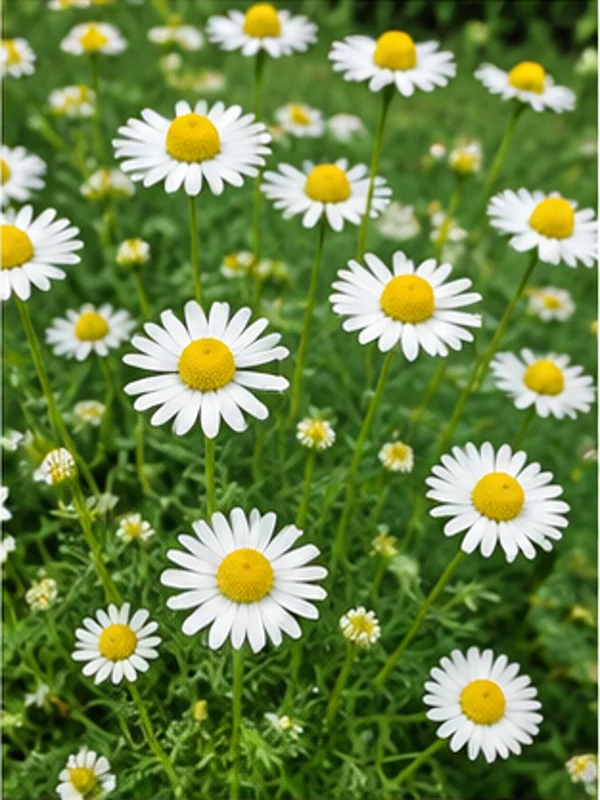
German chamomile
Matricaria chamomilla
An annual herb with small white-and-yellow flowers used for tea. German chamomile differs from perennial Roman chamomile.
Full sun
Moderate; well-drained roots
Timing depends on cultivar, propagation and local conditions
Check cultivar mature size and nursery guidance
Growing conditions
Annual herbs · Annual
Climate candidates: Temperate (oceanic), Mediterranean, Subtropical, Semi-arid, Continental, Highland / mountain
Grow in the cool season in warmer districts; not for peak desert summer.
Soil: Well-drained soil; check species and cultivar requirements in the care reference.
Temperature: Mild weather is best; excessive heat shortens flowering.
Establishment: Surface sow in mild weather; keep seedbed moist until germination.
Country tags: United States, United Kingdom, Canada, Germany, Japan, Australia, New Zealand, South Africa, Pakistan, India, France, Spain, Italy. Broad candidates, not a local planting guarantee.
Botanical care reference · General care reference checked; precise city suitability and cultivar requirements remain separate.
Numeric hardiness, germination, mature dimensions and container presets are not yet verified. Check the cultivar label and local nursery advice rather than assuming vegetable defaults.
Good companions
- No documented pairings
Keep apart
- No documented conflicts; absence of data is not a guarantee
Beginner tips
- 1.Pick fully open flowers and dry promptly.
- 2.Avoid waterlogged soil.
- 3.May self-seed; check local restrictions.
German chamomile quick answers
- How much sun and water does german chamomile need?
- German chamomile: full sun; watering is moderate; well-drained roots.
- How far apart and how deep should I plant german chamomile?
- Space plants Check cultivar mature size and nursery guidance apart and plant at follow the seed supplier or nursery planting level depth. Use the spacing or raised bed calculators to work out how many fit your bed.
- How long does german chamomile take?
- Expect Timing depends on cultivar, propagation and local conditions under normal growing conditions; cultivar, temperature and day length can change this.