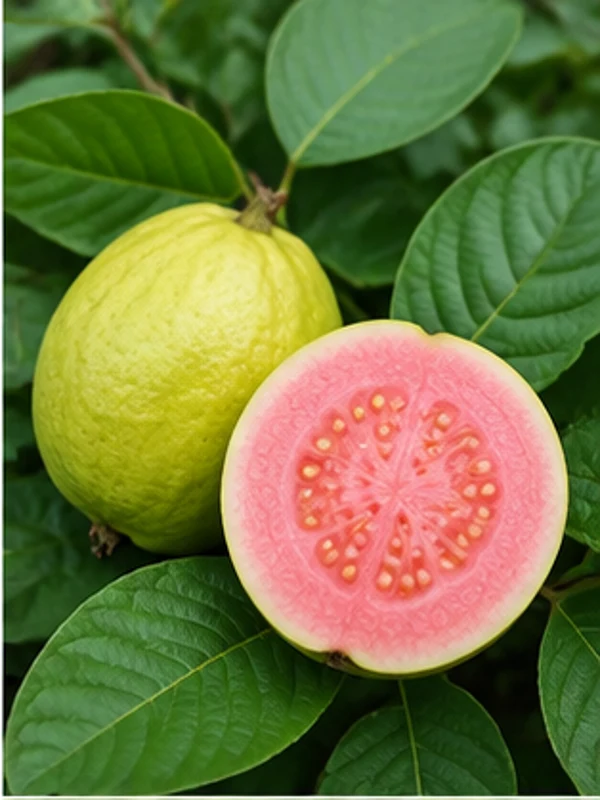
Guava
Psidium guajava
Guava is a tropical and subtropical fruit tree. Named, vegetatively propagated cultivars give more predictable fruit than seedlings.
Full sun
Deep watering during establishment and fruiting
Timing depends on cultivar, propagation and local conditions
Check cultivar mature size and nursery guidance
Growing conditions
Tropical fruits · Woody tree or shrub
Climate candidates: Tropical, Subtropical
Warm districts only, not a whole-country recommendation. May be invasive in some regions.
Soil: Well-drained soil; check species and cultivar requirements in the care reference.
Temperature: Warm growing conditions; frost damages young trees.
Establishment: Plant a named nursery cultivar in the warm establishment season with reliable water.
Country tags: India, Pakistan, Brazil, Australia, South Africa, United States, Thailand, Malaysia, Indonesia, Philippines, Sri Lanka. Broad candidates, not a local planting guarantee.
Botanical care reference · General care reference checked; precise city suitability and cultivar requirements remain separate.
Numeric hardiness, germination, mature dimensions and container presets are not yet verified. Check the cultivar label and local nursery advice rather than assuming vegetable defaults.
Good companions
- No documented pairings
Keep apart
- No documented conflicts; absence of data is not a guarantee
Beginner tips
- 1.Young trees need protection from frost.
- 2.Monitor fruit fly and remove fallen fruit.
- 3.Check local invasive-species restrictions before planting.
Guava quick answers
- How much sun and water does guava need?
- Guava: full sun; watering is deep watering during establishment and fruiting.
- How far apart and how deep should I plant guava?
- Space plants Check cultivar mature size and nursery guidance apart and plant at follow the seed supplier or nursery planting level depth. Use the spacing or raised bed calculators to work out how many fit your bed.
- How long does guava take?
- Expect Timing depends on cultivar, propagation and local conditions under normal growing conditions; cultivar, temperature and day length can change this.