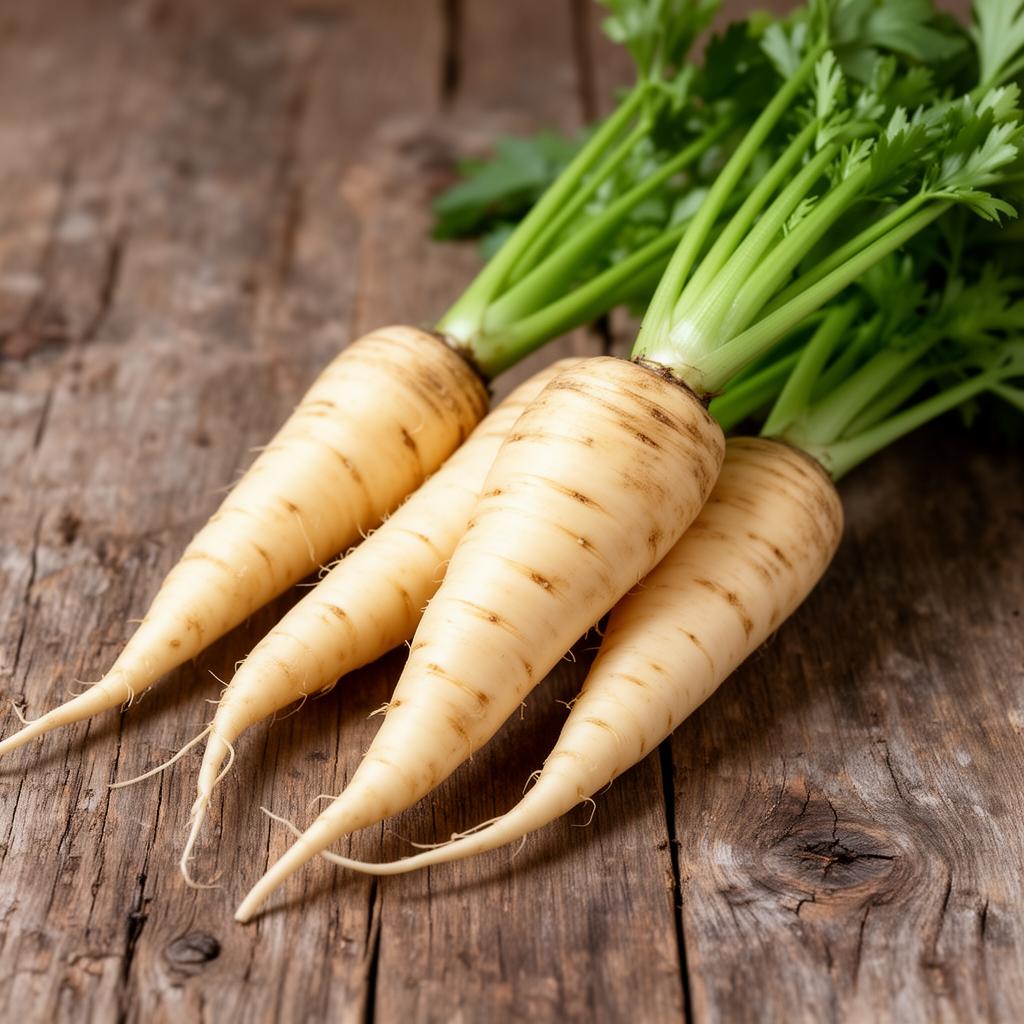
Sweet after frost
Parsnip
Scientific identity not yet reviewed
Long, slow root crop. Leave in ground over winter, frost converts starch to sugar.
Sun
Full sun
Water
Even
Harvest
100, 130 days
Spacing
10 cm
Growing conditions
Root vegetables · Annual
Climate candidates: Temperate (oceanic), Mediterranean, Semi-arid, Tropical, Subtropical, Continental, Highland / mountain
Country tags identify broad gardening candidates, not every district. Use the appropriate local growing season and locally adapted varieties.
Country tags: United Kingdom. Broad candidates, not a local planting guarantee.
When to sow
temperate
J
F
M
A
M
J
J
A
S
O
N
D
mediterranean
J
F
M
A
M
J
J
A
S
O
N
D
tropical
J
F
M
A
M
J
J
A
S
O
N
D
cold
J
F
M
A
M
J
J
A
S
O
N
D
Good companions
- · Pea
- · Pepper
- · Radish
Keep apart
- · Carrot
Beginner tips
- 1.Use fresh seed only, old seed won't germinate.
- 2.Mark rows, slow to sprout (3 weeks).
- 3.Harvest after a hard frost for sweetness.
Parsnip quick answers
- When should I plant parsnip?
- Typical Northern Hemisphere sowing months by climate are temperate climates: April and May; Mediterranean climates: March and April; tropical climates: October and November; cold-winter climates: May and June. In the Southern Hemisphere shift these by about six months, and check your local frost dates first.
- How much sun and water does parsnip need?
- Parsnip: full sun; watering is even.
- How far apart and how deep should I plant parsnip?
- Space plants 10 cm apart and plant at 1 cm depth. Use the spacing or raised bed calculators to work out how many fit your bed.
- How long does parsnip take?
- Expect 100, 130 days under normal growing conditions; cultivar, temperature and day length can change this.
- What grows well with parsnip?
- Good companions: Pea, Pepper and Radish. Keep apart from Carrot.